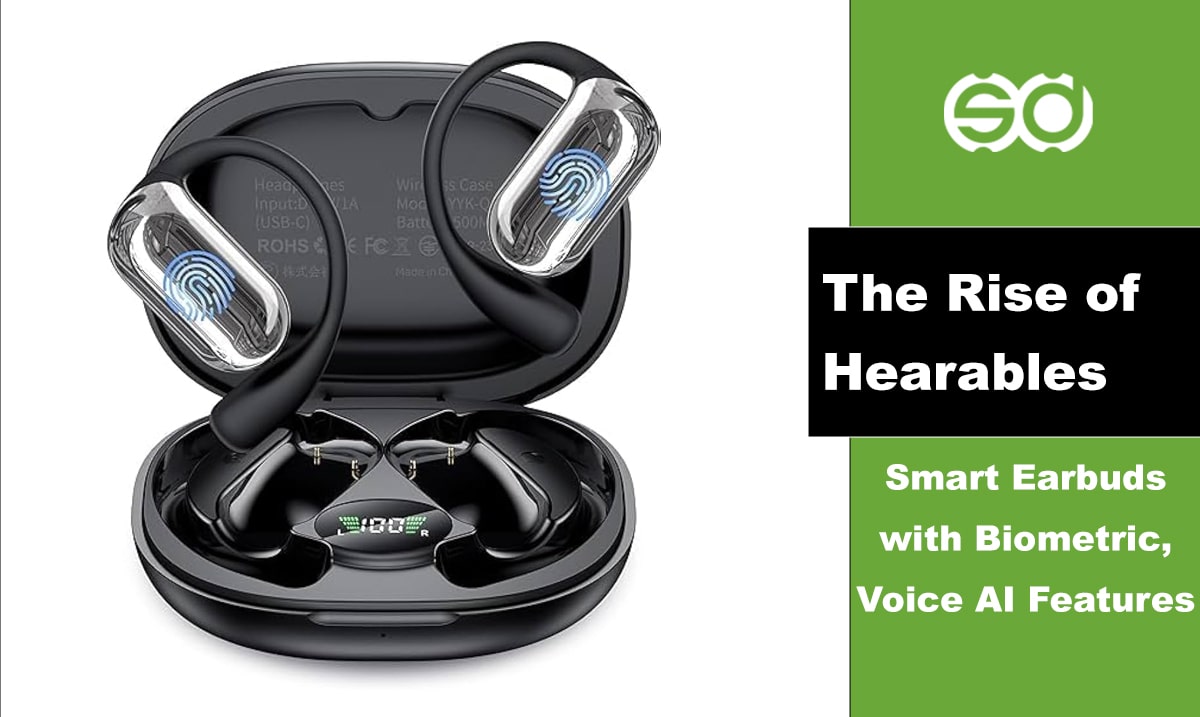

The Rise of Hearables: Smart Earbuds with Biometric and Voice AI Features
Hearables — smart earbuds and in-ear devices that blend audio playback with sensors and on-device intelligence — are rapidly evolving from simple music accessories into multifunctional personal devices. They now combine high-quality audio, biometric sensing (heart-rate, SpO₂, motion), and voice-AI features for hands-free, contextual interactions. :contentReference[oaicite:0]{index=0}
What are Hearables?
Hearables are ear-worn devices that merge traditional headphone functions with wearable-tech capabilities: onboard sensors, local processing, and connectivity to phones or cloud services. They can serve entertainment, health monitoring, and voice-assistant use-cases in a single compact form factor. :contentReference[oaicite:1]{index=1}
Why the recent surge?
Market demand for smarter, more useful personal devices — plus improvements in tiny sensors, low-power AI chips, and voice recognition — has accelerated hearables growth. Industry research expects the hearables market to expand sharply as biometric and AI features move from premium prototypes into mainstream models. :contentReference[oaicite:2]{index=2}
Key Features Driving Adoption
- Biometric Sensors: Heart-rate, SpO₂, motion/step counting, and ear-based temperature sensing for fitness and wellness tracking. :contentReference[oaicite:3]{index=3}
- On-Device Voice AI: Natural language assistants and local wake-word processing that reduce latency and preserve privacy.
- Adaptive Audio & AI Tuning: Real-time noise management and adaptive EQ that analyze the environment and user prefs. :contentReference[oaicite:4]{index=4}
- Health & Assistive Modes: Over-the-counter hearing support, conversation enhancement, and fall/alert detection.
- Connectivity & Ecosystem: Seamless switching across devices, companion apps for data insights, and cloud-sync for advanced AI features. :contentReference[oaicite:5]{index=5}
Regional Notes — Smart Earbuds USA
In the U.S., consumers often adopt premium hearables first — driven by tech-savvy buyers who value voice assistants, privacy-preserving on-device AI, and integrated health tracking. North America remains a major market contributor for hearables innovation and sales. :contentReference[oaicite:6]{index=6}
Benefits to Users
- Convenience: Hands-free voice control, contextual replies, and fewer device switches.
- Wellness insights: Continuous, non-invasive biometric data for fitness and early-warning signals.
- Personalization: AI-driven sound profiles and adaptive noise control tailored to the listener and environment.
- Privacy & Latency: On-device processing reduces cloud exposure and improves real-time responses.
Challenges & Considerations
- Sensor Accuracy: Ear-based biometrics are improving but must be validated against medical-grade devices for clinical use. :contentReference[oaicite:7]{index=7}
- Battery Life: Adding sensors and local AI increases power draw — engineering trade-offs remain key.
- Data Privacy: Biometric and voice data require transparent policies, strong encryption, and clear user consent.
- Regulation & Certification: Health-related features may trigger medical-device regulations depending on jurisdiction.
What OEMs & Brands Should Focus On
- Invest in low-power AI chips and sensor fusion to balance features and battery life. :contentReference[oaicite:8]{index=8}
- Design clear UX around biometric insights — avoid alarmist readings and provide actionable guidance.
- Prioritize privacy-first architectures (edge processing, minimal-cloud telemetry) and user control over data.
- Partner with validated sensor vendors and clinical researchers when marketing health claims.
Conclusion
Hearables represent the logical next step for earbuds: compact, always-on personal assistants that double as wellness trackers and contextual audio devices. As voice AI, sensor accuracy, and low-power compute improve, expect biometric and voice-AI features to become standard in many smart earbuds — particularly in premium models sold in the USA and other advanced markets.